
SEBI Registered OBPP
Enjoy effortless bond investing
with our intuitive online bond platform
Minimum Investment
Tie up with Institution
Bonds Transacted Online


What is Bonds ?
Bonds are debt instruments issued by governments, municipalities, or corporations to raise capital, where investors lend money in exchange for periodic interest payments and the return of the principal amount at maturity. Bond trading involves buying and selling these bonds in the secondary market before they reach maturity. The value of bonds fluctuates based on interest rates, credit ratings, and market conditions, offering traders opportunities to profit from price changes. Bond trading is often considered a safer investment compared to equities, providing a steady income stream while helping to diversify investment portfolios.
Why invest in bonds ?
Investing in bonds offers a range of benefits, including stable and predictable returns through regular interest payments, which can provide a reliable income stream. Bonds also offer lower risk compared to stocks, making them an attractive option for preserving capital while diversifying your investment portfolio.


Capital preservation
Capital preservation means protecting the absolute value of your investment via assets that promise return of principal. Because bonds typically carry much lower risk than stocks, as are repaid prior to equity holders on liquidation, these assets can be a good choice for investors looking for safer investments.

Income generation
Bonds provide a fixed amount of income at regular intervals in the form of interest known as coupon payments.

Diversification
Investing in a balance of stocks, bonds and other asset classes can help you build a portfolio that seeks returns but is resilient through all market environments. Stocks and bonds typically have an inverse relationship, meaning that when the stock market is down, bonds become more appealing due to modest returns with intermediate risk.

Risk management
Fixed income is broadly understood to carry lower risk than stocks. This is because fixed income assets are generally less sensitive to macroeconomic risks, such as economic downturns and geopolitical events.

Invest in a community
Municipal bonds allow you to give back to a community. While these bonds may not provide the higher yield of a corporate bond, they often are used to help build a hospital or school or that can improve the standard of living for many people.

Tax benefits
Govt bonds allow for indexation benefits and are much less taxed than corporate bonds and some are also tax-free sources of gains.
Types of
Bonds

Green bonds
A green bond is a debt instrument designed specifically to support specific climate-related or environmental projects. They are used to finance projects aimed at sustainable agriculture, pollution prevention, fishery and forestry, clean water and transportation, and environment-friendly water management projects.
54EC Bonds
54EC Bonds involve tax exemptions on long-term capital gains for investors who have sold their properties. The interest rate on this bond is 5% payable annually. TDS is not deducted from the interest on this bond; however it shall be included in the total income of the assessee.
Convertible bonds
These are special types of bonds that allow the conversion of the bond amount into equity, on terms that are pre-determined.
Government Bonds
Government bonds are issued by the Central and State Governments, as well as the municipalities. These bonds are considered to be the safest investment...
Sovereign Gold Bonds
These Gold Bonds are issued by the Government of India and are a great alternative to buying physical gold...
Zero-coupon bonds
A zero coupon bond is a type of bond wherein the issuer does not make any coupon payment but sells the bond at a substantial discount...
Corporate Bonds
Corporate bonds are bonds issued by companies or corporations that could be private or public which are of different sizes and standing...
Why choose
Bonds
with Taurus?

Market leadership
Over 20+ years of experience and amongst top 10 market participants of fixed income in India.

Expertise
With more than a team of 50+ fixed income analysts and dealers never stand a chance to lose out on debt markets.

Extensive market reach
With our team catering to clients pan-India, get involved with us from any and region and community.
Steps to open an account
Register

Complete the online registration form by providing your personal details to create a secure account.
OPEN ACCOUNTVerification

Submit the required documentation and complete the certification process to confirm your identity and compliance.
Start investing

Fund your account and start trading with access to investments and tools.
UPI Handle Bonds

taurrus.icdm.brk@validicici

taurrus.cbrics.brk@validicici
Request A Call Back
* denotes mandatory fields
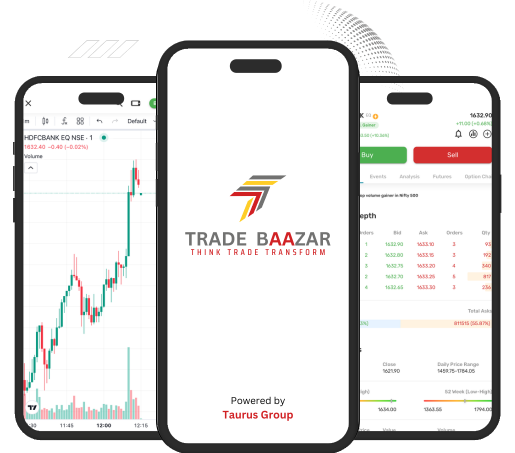
Simplify your investment journey with our platforms
Simplify your investment journey with our platforms, crafted to offer a smooth process and rewarding results.

Enjoy real-time market updates, latest features and a seamless trading experience.

Comprehensive portfolio view and analysis for effective investment management.

Advanced charting tools for in-depth market analysis.

User-friendly interface for quick and easy trading.
Testimonials
What our happy client say.
As a process transformation company, we rethinks and rebuilds processes for the digital
FAQS
Bonds are debt securities issued by governments, corporations, or other entities to raise capital. When you buy a bond, you are essentially making a loan to the issuer for the principal when the regular interest payments mature (known as coupons) Bonds have a fixed term, after which they mature and the donor actually pays.
Bonds are ideal for individuals looking for stable, low-risk investments. Investors who prioritize preserving their capital while earning regular interest income, such as retirees or those nearing retirement, should consider bonds. Additionally, bonds can be a good choice for anyone seeking to diversify their portfolio and balance riskier assets like stocks. Bonds offer predictable returns and are often seen as safer investments during times of market volatility.
Bonds may offer higher returns than fixed deposits, especially for long-term investments. Unlike fixed deposits, bonds can also provide the opportunity for capital appreciation if market interest rates fall, increasing the bond’s value. Additionally, bonds often have more flexibility, with a variety of types (government, corporate, municipal) and maturities, allowing investors to choose based on their risk tolerance and financial goals. While both bonds and fixed deposits provide a steady income stream, bonds typically offer better potential for growth and portfolio diversification
Bonds offer several advantages over other investment options. First, they provide consistent and predictable income through regular interest payments, making them ideal for conservative investors or those seeking a steady cash flow. Second, bonds are generally lower-risk compared to stocks, offering more stability, especially during market volatility. Bonds also act as a hedge against stock market fluctuations, helping to diversify a portfolio. Additionally, certain bonds, like government bonds, are considered very safe investments, offering security with minimal risk to your capital.
- Government Bonds
- Issued by governments to fund operations, these are considered low-risk and provide stable returns. Example: Municipal bonds.
- Corporate Bonds
- Issued by companies to raise capital. These bonds typically offer higher interest rates than government bonds but come with higher risk, depending on the company's credit rating.
- Municipal Bonds
- Issued by local governments or municipalities. Interest earned is often tax-exempt, making them attractive for investors in higher tax brackets.
- Convertible Bonds
- These can be converted into a specific number of shares of the issuing company, offering potential for capital appreciation along with fixed income.
- High-Yield (Junk) Bonds
- These offer higher returns but come with higher risk, typically issued by companies with lower credit ratings.
Each type of bond caters to different risk tolerances and investment goals.
Yes, certain bonds offer tax-saving benefits, making them attractive to investors looking for tax-efficient investment options.
- Municipal Bonds
- In many countries, interest earned on municipal bonds is often exempt from federal and sometimes state taxes, making them a popular choice for tax-conscious investors.
- Tax-Free Bonds
- Issued by government organizations, the interest income on tax-free bonds is exempt from taxation. These are typically long-term investments with lower risk.
- Government Savings Bonds
- Some government bonds, such as Sovereign Gold Bonds or Infrastructure Bonds, may offer tax benefits under specific sections of the income tax laws, providing either exemptions or deductions on interest earned.
Yes, while bonds are generally considered safer than stocks, they are not risk-free. Some potential risks in bond investments include:
- Interest Rate Risk
- Bond prices typically fall when interest rates rise, which can lead to capital loss if you need to sell before maturity.
- Credit Risk
- If the issuer of a bond defaults or experiences financial difficulty, you may not receive interest payments or your principal back, especially with corporate or junk bonds.
- Inflation Risk
- The fixed interest payments from bonds may lose purchasing power if inflation rises, eroding the real return on your investment.
- Liquidity Risk
- Some bonds may be difficult to sell quickly without affecting their price, particularly in less liquid markets or during economic downturns.
Bonds typically do not have a lock-in period like some fixed deposits or savings schemes. However, they do have a maturity period, which is the date when the bond's principal amount is repaid to the investor. You can sell most bonds before maturity in the secondary market, but their price may fluctuate depending on market conditions. That said, certain bonds like tax-saving bonds or government savings bonds may have specific lock-in periods, during which you cannot redeem the bond. Always check the terms and conditions of the bond before investing to understand its liquidity and redemption options.
Yes, in most cases, you can sell your bonds before maturity in the secondary market. However, the price you receive may vary based on market conditions, interest rates, and the bond's credit rating. Selling before maturity could result in a capital gain or loss, depending on the bond's current market value compared to the price you initially paid. Keep in mind that some bonds, such as tax-saving bonds or government savings bonds, may have restrictions or penalties for early withdrawal. It's important to review the specific bond terms to understand your liquidity options before investing.